Sunday, August 14, 2011

Seeing is Believing*

*Written for the Grameen Foundation blog, Creating a World Without Poverty: http://grameenfoundation.wordpress.com/2011/08/29/seeing-is-believing/.


After what seemed would be a third year of dry spells during the critical monsoon season, the rains have finally come in Gaya district of Bihar, India. Agriculture is one of the primary revenue sources for both farmers and wage earners, like the 200 households that the Grameen Foundation is reaching through the Integrated Livelihoods Model for the Poorest (ILM) pilot project being implemented in partnership with BASIX/The Livelihood School. The rains bring increased wage earning opportunities, which, translates into enhanced income and food security for most rural poor households here.

To mitigate the risks of volatile and erratic income generating opportunities, the Solutions for the Poorest (SfP) team aims to gradually enhance the skill sets of the primary breadwinners of our households and link them to more stable livelihood activities. These activities include daily wage activities, which are often seasonal and low skill, and entrepreneurial or productive activities, which lend to higher income generating potential and often require increased skill sets and start-up capital. Through our project, livelihood promotion will be sequenced to first enhance existing or introduce new daily wage activities that can rapidly increase household income while enhancing clients’ self-confidence and trust in our project team and partners. Subsequent to this is the introduction of new, productive livelihoods that generate higher incomes and can sufficiently fill gaps in income flows throughout the year. Examples of these include goat rearing, poultry farming, and vegetable vending. This approach moves away from creating an immediate dependency on credit to meet daily consumption needs and avoids disrupting clients’ existing livelihood patterns.

Over the past month in Gaya, we’ve engaged our clients in exposure visits as a means to enhance their understanding of new livelihood activities- both wage-based and entrepreneurial. Exposure visits entail visiting actors and observing processes along entire supply chains of the activities we will link households to. This deepens their understanding of the benefits and challenges associated with each activity and better informs their decision to commit to the “right” livelihoods for themselves and their households.

This past week’s exposure visit was to the neighboring village of Orr, where our clients met with women of the same socio-economic background and have successfully engaged in kitchen gardening, a method of small scale vegetable production that involves very little or no land and mostly organic inputs. Home grown vegetables significantly increase nutritional levels while also contributing to income through the sales of excess produce. Our clients also received a demonstration on gunny bag gardening, which is essentially a garden in a bag that grows along creepers against the walls and roof of the house. Prior to the visit, our clients expressed self-doubt in their capacity to start new activities, but after seeing how their peers have engaged successfully in these, they claimed, “Now that we have seen them do it, we know we can do it too! And, we are ready to start!” Seeing really is believing.


Our members touring the kitchen gardens of the women in Orr village**


Despite the heavy rains, the women stuck through the entire visit


Our lovely hosts of Orr village bid us goodbye


**Unfortunately, due to the heavy rains, supporting photos are limited.

Sunday, August 7, 2011

A Sunday Outing in Gaya

“Ma-jee, paisa dedo, ma-jee, paisa…” “Mother, please give us money,” was the pleading, out of habit and necessity at the same time, of the children and the elderly on the way up to the temple. The children had the energy to follow me up the 400 plus stairs, so halfway up in the scorching heat, when their pleading became an added weight, I succumbed and gave them a 10 rupee note, demanding that the recipient evenly share the money with the second boy, 5 rupees for himself and 5 rupees for the other. I was drenched in sweat as I reached the very top of the hill to the place where Buddha gave his third sermon after attaining enlightenment in Bodh Gaya. The sermon at Brahmayoni is referred to as the Adittapariraya Sutta or the Fire Sermon and was preached to a thousand former fire-worshipping ascetics on the subject of liberation from suffering through the detachment from the five senses and the mind. However, the temple there existed much before this sermon and derived its name from a natural fissure on the mountaintop, giving the appearance of a yoni, symbolic of the female energy. Believed to be the yoni or the female force of Lord Brahma, the temple became known as Brahmayoni. The main deity worshipped is a 5-headed goddess, Savitri, and before the shrine is the synthetic footprint of Brahma. The view of Gaya town, the sacred Falgu River, and the many other religiously significant sites of the area from atop the temple is marvelous.

Earlier this Sunday morning, after passing through several paddy fields in my somewhat flashy, white Amabssador, the glorious car of India’s past, we reached the Mangala Gouri temple, atop another of the many hills that pepper Gaya’s landscape. The temple is believed to have been constructed in the 15th century, but the location is believed to be the same mentioned in several puranas and various tantric texts dated much older. Many believe that this is another Upa-Shakthi Pitha, or one of the places where a body part of Shakthi fell to the earth. I had visited another Pitha in Kathmandu last year, dedicated to the yoni, so while a strange concept, it was not foreign to me. Here, Shakthi is worshipped in the form of a breast, a symbol of nourishment.


The Ambassador


In my 7 visits this past year, this is the first time I've seen the cursed Falgu River with water


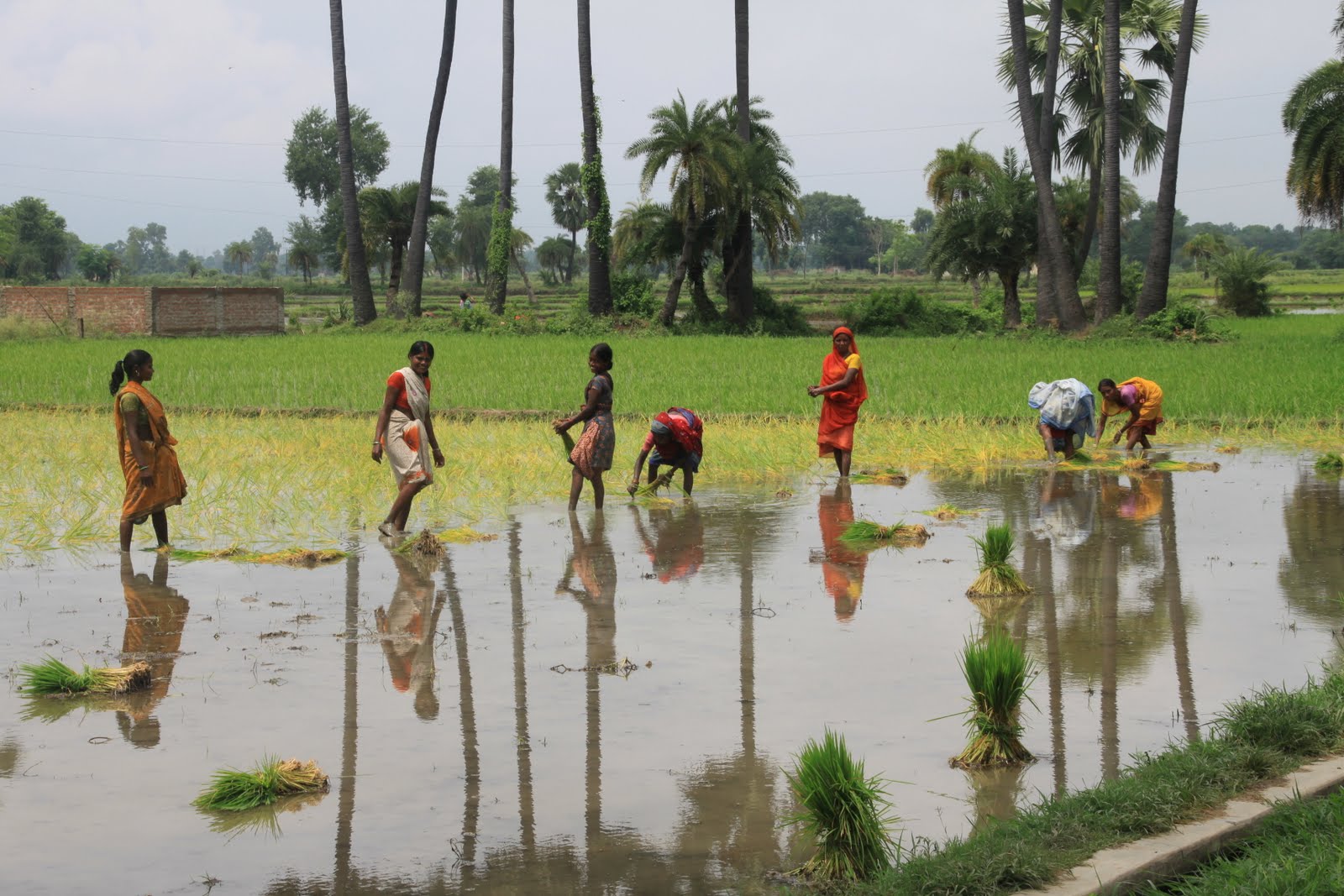
Women clearing the paddy fields for sowing


Vimanam of the Mangala Gouri temple


A hazy view of Brahmayoni from below


Savitri temple


The 5-headed goddess


'Matha Yoni' shrine along the way up


After only a half a day’s outing, I was drenched in sweat and exhausted from the heat and hiking up to the hilltops. After picking up pomegranates and mangoes at the tail end of their season, I headed home for a nice shower, lunch, and preparations for the week ahead. Stay tuned for an upcoming post on this week’s “field trip” planned for some of our members, where they’ll be observing and learning about the techniques and benefits of kitchen gardening, an easy, low cost way to grow vegetables at home to enhance food security and even make a small income from selling excess produce.


Lady clearing the paddy fields


Preparing for sowing the fields

Thursday, August 4, 2011

By the Grace of the Rains

The rains have come. India undergoes two monsoons- one from the northeast and another from the southwest. Bihar, falling within the former zone, has not been so lucky the last three years. Dry spells have diminished the rains of the monsoon season, beginning in mid-July and concluding around end August, and for a substantial rural population whose income patterns reflect seasonal needs, this has been massively detrimental. As discussed in previous posts, people like our clients in Gaya, Bihar, rely entirely on daily wage activities to generate irregular and nominal incomes that barely allow them to feed their families. Households can typically afford only pulses or vegetables for their daily meals- both would be too costly. Imagine then, as they wait for the monsoon, the period during which they generate the largest portion of their annual income from working the fields of the wealthy farmers, which is then staggered to help them survive throughout the remainder of the year, and it fails them. After two months away from Gaya, I returned two days ago to immense rainfall that has finally come after a harsh dry spell. Our clients may not be as focused and engaged, for the time being, in our interventions to mitigate these risks in the long run by gradually building their skills and linking them to more productive, stable income generating activities, but we are glad to know that opportunity, albeit small and precarious, has come knocking on their door to enable them to find food security today.

During the prior two months in Gaya, our work was primarily focused on five larger pieces. The first is what we call institutional development services, or more simply, forming the women heads of households into adapted self-help groups (SHGs), a proven model of aggregating skills, finances, and support for the greater benefit of each member. The other pieces involved assessing appropriate livelihood activities to link households to, preparing the training modules to build their skills to successfully engage in these, designing the financial products to help finance the activities, and finally, developing a monitoring and evaluation plan that would help us to track impact and changes in the households over time to inform whether we are essentially doing our jobs correctly.

SHGs are typically comprised of 8-10 women of homogenous social and economic backgrounds who come together on a weekly basis to deposit small scale savings (which may later be used for inter-lending) and serve as a means for peer to peer support and learning and effecting change in the community (or the household) cohesively, natural resource management being an example of such change. The SHG also serves as a platform for providing external technical support such as financial literacy and accounts management and facilitation with other external services such as government welfare schemes and bank linkages.

Facilitating the forming of these groups has been an immense challenge for the project team over the last few months. Building the social capital and diligence to engage in such a group for extremely poor women who have been neglected by all sides their entire lives is something we’ve learned cannot be done in six months to a year as has been proven with better off communities. Skepticism is still rampant as women (and their male counterparts) remember the bad taste that exploitative moneylenders have left in their mouths (and pockets). Time is money, and naturally our clients want to know the value of the outputs of their time and efforts to engage in the program. During our poorly attended meetings in scorching hot schoolhouses, male members would storm in with their rods and rocks in hand, threatening to beat their women for not being home to tend to meals and the children. We would turn these into exercises for empowering women, knowing that many would bear the brunt of their husband’s ignorance and wrath that evening. Can we view this as the price to pay now for greater empowerment and stronger income earning capacity in the long run?


Members collecting savings during an SHG meeting in August


Using audio and visual aids to conduct SHG meetings in August

To mitigate such responses, we’ve changed our approach to further engage male heads of households through ongoing dialogue on the benefits of their counterparts’ engagement and helping build their understanding that the entire household benefits through the woman. This has certainly helped, and we realize that ongoing dialogue with the women, both at the SHG as well as household levels, can help to clarify their misconceptions and skepticism of the services the program offers and build their trust in us as service providers. I think the most valuable lesson for me was realizing that this is a psychology program more than a development one, and our support should be sought by the women based on their own ability to articulate their situation and needs, rather than it being supplied by external parties such as ourselves, based on our own biases. We can add value by helping the people we serve to preserve their identities as citizens, as one very brilliant and wise practitioner advised me, so that they can access the government and private services that are rightfully theirs.


I love photographing this village elder every time I visit Raili village in Gaya


Singing school children back in May


Peeping into the SHG training session where his mother sits


SHG trainings in May


Children often sit or play among the mothers during the trainings


Children of clients


Happiness


Over the following two months, I’ll try to keep up with my blog posts on the story of these women. Keep reading!

Sunday, July 10, 2011

The Mayan Experience Concludes: Mexico

We had finally come near to the end of the Mayan experience, but we still had Mexico to go. From Caye Caulker, we boarded a speed boat that took us directly to an “expedited” Mexican border, allowing us to avoid a 13 hour chicken bus ride and a rougher border crossing. As we docked the boat, we could see several Mexican guards armed with guns and sniffer dogs awaiting the arrival of travelers like ourselves and some not, I’m sure. Once we cleared immigration and customs, we were on our way to Playa del Carmen, the fastest growing resort town in the Americas.

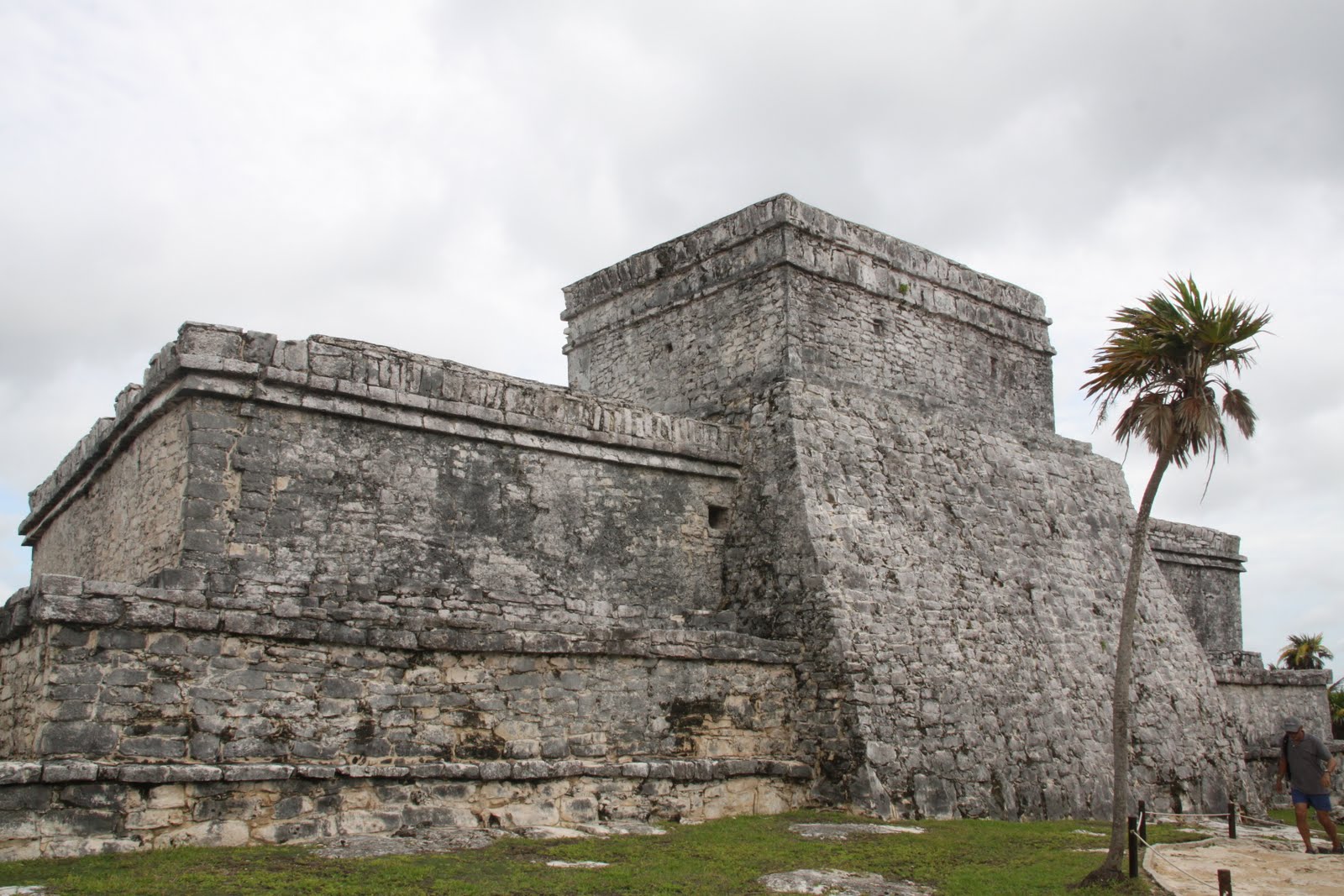
Tulum, one of the last cities to be built and inhabited by the Ancient Maya, is about a 45 minute drive from Playa, and is situated along the eastern coast of the Yucatan Peninsula in the Quintana Roo state of Mexico. Tulum is believed to have been dedicated to the planet Venus, hence, the female force of nature. The main shrine at the center of the city, directly facing the gorgeous blue waters of the Caribbean and the sunrise and the sunset, is for Venus, but after Spanish conquest, came to be known as the Pyramid El Castillo (The Castle). Two other significant buildings are the Temple of the Frescoes and the Temple of the Descending God. The former was used as an observatory for tracking the movements of the Sun. A description at the entrance to the ruins reads:

“Religious life and a pilgrimage to the sanctuary, a cultural expression associated with economics, politics, and nature. Mayan gods were present in one or more elements of nature. Some were manifest in the stars or in atmospheric phenomena like rain; others in plants like the ceiba (cotton silk tree) and animals like the jaguar. Each season of the year and each daily activity, such as the harvest, were marked by a ritual dedicated to a deity, aimed at making sure human labor would be rewarded with optimum results. Tulum was a city dedicated to the planet Venus, a deity with a dual nature; that of the morning and the evening star. The descending god symbolized by the setting Sun is closely related to Venus, and so it can be said that the evening star was worshipped at Tulum; thus, the image of this deity is found in the façade of some of the buildings, and its accesses are oriented to face the point where this planet sets. Another important deity was Ek Chuah, the god of trade, to whom tribute was paid in the course of commerce interchanges.”

This description resonates again with Hindu philosophy as well as the many ancient philosophies of the eastern world. It also demonstrates the Maya’s recognition of the sanctity of life, nature, the elements, and the cosmos. Interestingly, the site is run over with iguanas that appear to be guardians of the sacred temples.


Temple of the Descending God


Temple of the Frescoes


Under the watchful gaze of the guardian iguana


Templo Dios del Viento (Temple of the Wind Gods)


Temple to Venus, the main shrine


The back of the Venus Temple, facing the Caribbean


Another view of the Temple to Venus


Our last days were spent lounging on the stunning beaches of Playa del Carmen, swimming in its crystal and turquoise blue waters, or simply walking along the promenade, lined with restaurants and shops. A variety of street performers entertained passersby, who could rest over a cold beer, refreshing gelato, or very cheap massages. This wouldn’t be considered authentic Mexico, but it was a relaxing way to end the trip before returning to the madness of work!


Street performer poses for the camera


The Cotton Candy Man!


Nacho Libre masks for sale


A "shining" street performance


Care for a cigar?


Saturday, July 2, 2011

The Mayan Experience Continued: Belize

The border crossing between Guatemala and Belize is a crude one that we were able to traverse through rather quickly. Once across, it was another 30 minutes before we reached our first stop in the English-speaking Caribbean nation of Belize, San Ignacio. “Go slow!” is the motto of this tiny country, cushioned between Guatemala, Mexico, and the Caribbean Bay. The small town comprises the most intriguing mix of Indian and Chinese business families, who run the hotels, convenience, and liquor stores, the Amish, who oversee the organic production of cheese and other dairy products, descendents of the Africans forcibly moved to the Americas during the slave trade era, the Rastafarians, and of course, the indigenous population of Belizeans. Even a small Sri Lankan population resided here!

The most adventurous part of the trip was probably here in Belize, roughly an hour’s drive out of San Ignacio. After a 40 minute hike through thick, lush, tropical jungle and thrice crossing the Mopan River, we had reached the mouth of the Actun Tunichil Muknal (ATM) Cave, known as a living museum of Mayan relics. We stored our cameras in waterproof bags (which, unfortunately meant I couldn’t photograph the stunning green waters we plunged into as we swam our way into the cave) and strapped on our mining helmets. While some guides allowed other explorers to strip down to their bathing suits, ours was extremely particular about observing the ancient traditions of the Mayans, and at the very least, ensuring we showed the respect due to such a holy place, highly concentrated with thousands of years of built up potent energy garnered through faith, chants, and rituals. We were requested to remain clothed with our swimming suits underneath, and upon entering the chamber of rituals, further requested to remove our shoes and vigilantly navigate around the intentionally strategically placed remnants of the ancient Mayan people.


Team Intrepid crossing the Mopan River


Pottery shards from Mayan rituals


The famous frog symbol on Mayan ceremonial pottery


Strategically positioned ceremonial pottery in their original places


Spirit catchers, left tipped over


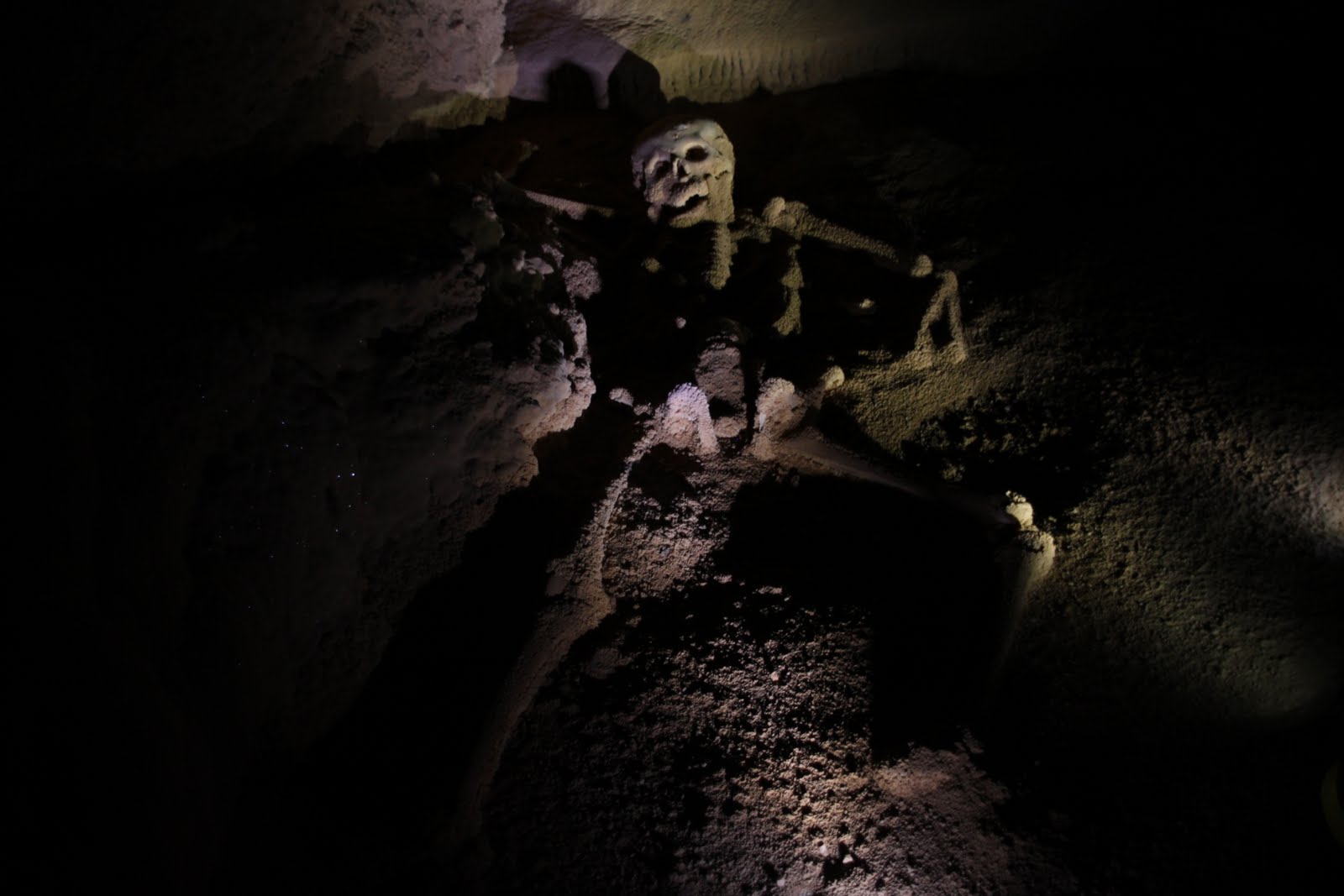
I fully understood why this was referred to as an Indiana Jones activity upon reaching the mouth of the cave. Caving requires swimming, hiking, and climbing through body deep waterways, jagged crevices we could barely squeeze our bodies through, and massive caves several meters high, with only our head lamps showing the way forward. Gazing above and around, we gasped with awe at the natural limestone formations protruding from the walls, ceilings, and floors of the cave in the form of stalagmites, stalactites, and pillars formed over thousands of years once these two ends met. Jellyfish-like and other configurations hung over us in hues of whites, creams, corals, and reds, glimmering at the touch of light from our torches. The cave is 3 miles deep, however the Mayans took their rituals further into the cave only a few hundred meters every 300-500 years before finally reaching the ceremonial room to conducts their rituals over a 1,400 year span. The ceremonial hall contains the remains of altars, spirit catchers, and other ritual instruments left in their original, very strategic positions based on astrology and formations configured by auspicious numbers, the most significant being 3, 5, 7, 9, and 13. Skeletal remains of the shaman elders and sacrificed young people, most likely for rain in such a freshwater-sparse region, are also strategically scattered throughout the hall, the most famous being that of an ostensible young, princess of a Mayan kingdom, known as the Crystal Maiden, who was believed to have been killed by a mortar stone to the back of the head.


Skeleton head of a shaman elder


Limestone formations in the ATM cave


Jellyfish-like limestone formations


More ceremonial pottery


The Crystal Maiden


From San Igancio, we boarded a chicken or local bus for the 3 hour drive to Belize City, one large shanty town rife with poverty and criminal activity. From here, we caught a 45 minute water taxi to Caye Caulker, a limestone coral island measuring 5 by 1 miles. By this point in the trip, a virus turned sinus infection was taking its toll, and while the rest of the group went sailing and snorkeling along the Belize Barrier Reef, I tried to enjoy brunch on the beach and catch up with emails before crawling back into bed for some much needed rest. For the remaining 2 nights, we did, however, enjoy some of the juiciest lobster and fresh fish dinners. It was time to get ready for the next and final stop, Mexico!


Our drummer friend, Emmit


Cotton candy!


Man, cutting freshly caught lobster


Drying laundy under the house


Toys


Caribbean waters off the Caye Caulker shores


The full team Intrepid


Fresh lobster, shrimp, and other crustaceans