Tuesday, June 2, 2009
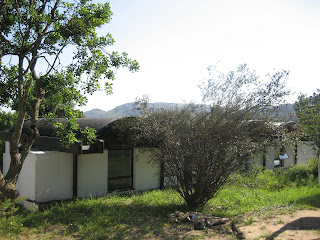
A Visit to the Lubombo and Shiselweni Countryside
Acclimating to Life in Mbabane
ing, so I’m frustrated by the inability to access email and the world outside of Mbabane. I have no watch or functional mobile phone as yet, so I never know what time it is and am constantly calling the hotel reception or asking bystanders for the time.
Experiences of a Novice Development Worker in Swaziland
Over the next three months, I will assist in establishing IRD’s new presence in Swaziland and starting up our second program, funded by USAID’s Office of Foreign Disaster Assistance (OFDA)- Drought Mitigation through Community Management of Water Harvesting Systems and Conservation Farming in Shiselweni and Lubombo Districts. The program will use a community-based approach to help mitigate the devastating effects of cyclical drought patterns and subsequent reduction in resilience and need for food aid for 6, 880 beneficiaries by: a) increasing water availability for human consumption coupled with hygiene promotion activities, and b) increasing farm yields through runoff farming water harvesting and conservation tillage techniques.
Back in Lebanon
July 24, 2007. I’m back in Beyrouth, and it is somehow more surreal than the first time. But, naturally, more familiar, and I feel at ease as if I’d never left the place the first time. I’ve been assigned here for roughly five weeks to contribute to the research and design of a municipal capacity building program to support local economic development.
It’s already after dark now. A stronger sense of calm permeates the mildly lit streets of Hamra since the July war of 2006, and I notice new developments and restaurants lining the streets to the hotel used by most IRD employees on assignment. The Johnnie Walker ads have long been removed, and the count on the Rafik Hariri billboard stands at 809 tonight.
After entering the lobby of the hotel, its familiarity welcomes a sense of comfort and security. Familiar faces and procedures, though some new, and news of missing faces provide a sense of connection- Samer, the bellboy, finally decided to join his sister in California, despite his very vocal, anti-American fits during our conversations last summer; Nay off to give life in Qatar a try; and Abed, the waiter in the hotel restaurant, has moved onto a new job. I get my room key and am surprised to see that I’ve ended up in the same room that I occupied during my five weeks in Beirut last year.
I immediately turn to the balcony and take in the familiar view, which I have reminisced about many times since last October. In a panic, I take it all in forcefully, in an effort to savor it all as a pre-emptive measure against the shock of a potentially harsh reality. Fortunately, this is real.
July 31, 2007. “It is a country of contradictions—that is what keeps it interesting.” This is how one Lebanese woman describes her motherland. And, so true and poignant this is, and a scene that I caught sight of on my way yesterday to a meeting at one of the ministries was very illustrative of this. Downtown’s beautiful Parisian streets, buildings, and squares are practically desolate, and walking through them reminded me of empty Hollywood lots at Universal Studios. As I crossed over the barricades and checkpoint leading to the Parliament (as no cars are permitted near the site for security reasons), the security guard approached me and said I needed to go to another block, turn right, and proceed another two blocks before I arrived at my destination. As I walk down, I can’t help wondering whether he’s playing the fool with a clearly lost foreigner trying to find her way around the city. As I make the first right, the Ameen mosque towers over me, and its magnificence, magnitude, and beauty take my breath away. As I stare at it in awe, something else catches my eye—from the corner, I realize the entire space before me is densely packed with tents—similar to what I witnessed in August and September 2006 when the displaced were sheltered under similar conditions right in the heart of Beirut. I begin to slightly panic as I walk briskly by the tents down the desolate side road. I can just barely make out faces peering from the shadows through the flaps of the tents. I turn around once to take in the sight before taking the second and final right turn into the ministry building.
I am amazed by the contrast. Newly constructed government buildings and the colossal mosque- the pride of Beyrouth- line the streets and in this random gap among it all are who? Displaced? Refugees? I’m completely baffled. I want to capture the moment on film, but my gut instinct is to keep walking and be satisfied with the mental photo that I’ve managed to capture. Later that day, I ask a woman at the ministry who those people are- “It’s the opposition, since the first of December. They continue to remain there in protest.” I’m shocked. I recall seeing this on the news. And, they’re still here?
As I leave the building and begin the dreaded walk back by the tents, a shiver runs down my spine. I can feel the eyes piercing into the lone, unaccompanied woman walking by. I am witnessing history in the making, and I feel humbled and blessed.
August 2, 2007. There has been no time to write here, which has been a real pity. It amazes me how differently I’m perceiving the country this time around. It is far more liberal than I remember. There again is the juxtaposition of women wearing next to nothing walking alongside their Muslim sisters, covered from head to toe in their abayas and even the occasional burqa.
The young seem to have grown apathetic, probably as a result of fatigue, frustration, and hopelessness from the political divides that torment and burden this country, stalling/stunting any progress politically, socially, or economically—advancements that this country has much potential for. Where does one draw the line between resilience and apathy? Yes, the people on the frontlines are resilient, but what concerns me here, as it does in Sri Lanka and other countries plagued by conflict, is the lack of engagement of youth—of the younger generation. Most in the capital that I spoke to are removed and really apathetic to all that occurs in the rural areas. If it does not concern them, then they are happy to just be able to focus on a life that revolves around the self and its interests.
When I asked a young woman at a ministry, in between business talk, of her opinion on the elections this Sunday, I was a little taken aback, yet not completely surprised by her response that resonated with most Lebanese youth living in the capital. These are precarious times in Lebanon. The recent stream of car bombs amidst political upheaval lends to paranoia and concern among people here. While some say to leave the country before the fifth, others claim that aside from a few skirmishes, things are likely to remain relatively calm. Two assassinated MPs are to be replaced- one from Beirut and the other from Al-Mattan in Mount Lebanon. Both were of the Hariri camp, but popular opinion is that the opposition will snatch these seats. Some expect that all hell will break loose, but I’m confident that will not be a concern until September.
The political landscape is as convoluted and ugly as it is in Sri Lanka in some ways. But, at least once can say that comparatively speaking, there is still some law and order left in this country.


Value Chain Development in Sri Lanka
IRD’s country director is a recent hire, and in general, there is still quite some disconnect within the organization, resulting in one country office knowing very little of the entire organization’s work worldwide. Fortunate for us, our staff seemed well aware of potential partners within Sri Lanka that have the necessary experience in working with local cooperatives and producer associations and facilitating micro-enterprise development. This greatly facilitated the necessary information gathering.
I was excited to learn that our most desired local partner is headed by the brother of a very good family friend. Somehow being of Sri Lankan Tamil origin, it’s difficult to always keep professional and personal life separate in this country. The company has an ideal corporate social responsibility policy, emphasizing their desire for the maximum sum of funds to go to rural communities with a maintained focus on the well-being of Sri Lankans. They are striving to facilitate a different cycle of distribution in rural areas where energy foods will reach the poor at affordable prices. They have also developed a program that will hone entrepreneurial and technical skills of rural folk and develop rural supply chains. We took advantage of the opportunity to visit some of their processing and collection points throughout the Gampaha district. We visited a pineapple farmer, a coconut farmer, and a dairy processing plant. I got a brief chance to discuss extending all of these services and supply chains to the Jaffna peninsula and Vanni region of Sri Lanka. I strongly believe that there is much talent and a historic record of a thriving agriculture sector here that has been excluded from this growth. Because the government has largely neglected the region in hopes of indirectly stunting its growth, we should look to the private sector as a better alternative.
During the assessment mission, I got the chance to visit some of our existing programs towards the south of the country. This included a visit to Hambantota to participate in the handing over of the Healthcare Center built by IRD and its local partner to the Ministry of Health and Nutrition, the Kirinda-Bundala sites where we have a Water Improvement program to supply clean water to households and community wells, Galle, where we’ve constructed toilets, a first aid room, and canteen in a local school, and finally Matara, where we have supported an awareness program on the prevention of vector borne diseases and promotion of clean drinking water and public health campaigns.
Exploring Egypt
The Pyramids and Great Sphinx
Egypt’s children still seek refuge, comfort, solace, and nourishment from the divine Nile River, or as they call her, Nil in Umm Al-Duniya-Mother of the World. It moves me immensely to think of the deep-rooted respect, love, and pride that the Egyptians today continue to retain in their hearts, minds, and souls for their motherland, soil, heritage, and culture. Driving through Giza, passing the zoo and the sphinx statue in the middle of the roundabout, a constant reminder of Egypt’s majestic past, without any warning or time for preparation, the great pyramids of Giza appear. It was one of those sights that takes your breath away as you stare up in awe and disbelief that you’re actually finally here.
Over a window of fifty days at this time each year in the Sahara Desert, for any random five days, a sandstorm strikes- the time is called Khamseen. Today is coincidentally one of those days! What an unforgettable, remarkable experience it was. The winds picked up speed as we made our way back from the Great Pyramid (the largest one) to our vehicle. Plastic bags blew up into the air and began dancing against the pyramid, and the sight was mesmerizing and soothing. As we made our way to the second pyramid, the wind had raised the sands to curtain the sun, blocking our view of everything. The shapes of the pyramids could barely be made out through the sand- like fog or a thick mist, but it was a beautiful, captivating sight. And, it was quite an experience as we covered ourselves from head to toe with scarves and shades. Sand was sticking to our skin, planting itself into our scalps.
One cannot enter the pyramids if claustrophobic. Bending at 90 degree angles, we crawled into the dimly lit, narrow passages, making our way into the room of the tomb. It completely felt like a scene out of the Indiana Jones chronicles. It was hot, humid, and sticky. Who would think that in this seemingly impenetrable calm, where the pharaohs has been put to rest so many years ago, that there could be such a violent sandstorm outside of these walls? Suddenly, the dim lights started to flicker, and out they went! We were eventually led out of the pyramid with the assistance of other tourists’ PDA and cell phone lighting.
We made a second attempt to visit the Pyramids and the great Sphinx a few days later, and just with our luck, the second sandstorm of Khamseen decided to strike again. On the final day of our trip, we tried a third time, and we were graced with the mercy of the Gods and were able to get some great photos under the Cairo sun.
The Great Sphinx
The Pyramids and Sphinx in Giza
Giza
Mosque near the Grand Bazaar
Aswan and Nubian Villages
We climb to the top of our felucca at the end of another surreal day in Egypt in Aswan. It’s dark with hardly any other boat afloat the calm waters of the Nile. Muharram and his cousin boat us back to the corniche in front of our hotel near the Aswan train station. After a lovely tour and authentic home-cooked meal in the warmth of Muharram and Omar’s Nubian village further down the Nile.
Just to backtrack, we arrived in Aswan a day earlier and wondered through the souk. We had an interesting interaction with a salesman who had us in his shop for hot, mint tea and proposed to me, asking if I would be willing and interested to consider an Egyptian. I said yes to the latter, but rejected the proposal—not for a mere 500 million camels! We took a felucca out later that day to visit Kitchener’s Island’s botanical gardens. In the evening, we enjoyed a lot of drumming, singing, and dancing to traditional Nubian songs as we made our way to the Nubian village for dinner.
A View from the Nile
Abu Simbel
It’s early- 4:24 am to be exact. We are waiting in a long queue- part of a convoy to Abu Simbel in the darkness of pre-dawn. It’s pristine and calm, and it’s strange to think that just miles from this paradise, where mosques and mausoleums glisten in the moon’s light, that there is a storm of human suffering- West Bank, Gaza, Palestine. The sun has just risen, and we speedily make our way down a road in the desert, similar to that leading the way to Vegas, blasting Arabic music in our vehicle. We question Osama about the requirement to travel in a convoy, and he responds, “Government protocol…for security. I know, it’s useless, but after the terrorist attacks…..” and we continue on.
Abu Simbel is magnificent and breathtaking, and is definitely my favorite site in Egypt. Turning the bend, we approach the colossal, magnificent structures. The kings gaze into the distant sun and Lake Nasser, and the sun, as if a servant to the great kings, dutifully shines on their faces, bringing out a beautiful, golden glow. The story goes that Ramses II, the most famous and important of the pharaohs, whose empire reached the furthest up the Nile to Sudan, was a very proud, narcissistic king. He was the only pharaoh to have statues depicting himself as a god in the temples of Egypt. These temples would additionally have scenes carved into the walls, illustrating him as a conqueror and hero in battles hardly won by him and the Egyptian army. For 16 years, the army fought a battle with the Nubian army. It finally ended in a truce at no one’s gain. The Nubian king then married his daughter off to Ramses II. She was Nefertiti- one of the most beautiful and powerful queens of Egypt. To ensure his reach and command the respect of the Nubians, he erected Abu Simbel and the Temple of Hathor here.
Abu Simbel
Front of Abu Simbel
The Pharoahs of Abu Simbel
Temple of Hathor
Luxor
We rushed to the weekly camel market in Daraw, just fifteen minutes north of Aswan. We arrive in the town, but the camel market is empty, and a boy in a galabayya, pushing his bike along the narrow dirt path in between the houses, shouts, “Mafeesh!” Our driver shouts back, “Mafeesh?...Mafeesh.” It seems there is no market today. We ended sitting on some camels for a few minutes just for the experience, and then moved onto the Temple of Kom Ombo—erected not in honor, but in fear, of the crocodile king.
After Kom Ombo, we part ways with Osama and head off to Edfu with the convoy to see the Temple of Horus. Everyone carries a Kalashnikov here. Sadly, it’s not a shocking sight having just come from Sri Lanka.
Daraw Camels
Temple of Kom Ombo
View from the Inside
Stunning architecture of ancient Egypt
Temple of Horus
Valley of the Kings, Luxor
We are sitting in front of King Tut’s tomb in the renowned Valley of the Kings. This, after a long donkey ride starting at 6:00 this morning over some very high mountains overlooking the Valley of the Workers, Valley of the Kings, and Queen Hatshepsut’s funeral temple. We’re a slip away from death, and are legs tingle. We finally reach a point where the donkeys cannot go on, so we begin the hike down to the Valley of the Kings to meet our guide. There, we also visited the tombs of Ramses III, IV, and the IX.
At sunset, we rented a felucca to enjoy the Nile a bit more before heading back to Cairo the next day. The sun begins to set, and the rays of the sun, beaming in our faces, is balanced by the cool breeze that also serves as the fuel for our felucca—the “Moon River.” We pass by a boy on the banks of the river, giving his camel a bath. It feels like a dream.
Shortly, we arrive at Banana Island, which resembles Kerala or Jaffna, full of mango, plantain, and mandarin trees. Wheat and sugar cane also thrive on this paradise island. We pluck a few plantains to satiate our cravings as we make our way back to Luxor. We concluded the evening with an amazing visit to the Karnak Temple.
On the way to the Valley of the Kings
My Ride
Valley of the Kings
Valley of the Queens, Thebes
Beautiful paintings on the walls of the tombs
Statue at Karnak Temple in Luxor
Another status in Karnak Temple of Luxor
Life on the Nile
Relaxing on the Nile
Mt. Sinai and St. Katherine’s
It’s 3:00 am on a Monday, and I begin this entry in one of the many stone huts that sporadically appear around a bend. The huts are dimly lit with kerosene lamps, and one or two Bedouin Arabs have made homes for themselves on the great Mount Sinai. I can’t explain in words the beauty of this sight and experience. As we made our way to St. Katherine’s from the Suez Canal, we must have passed at least a dozen checkpoints. As I peered from my window into the dark desert night sky, I couldn’t help gasping because of the shocking beauty of the colossal, rocky mountains, glistening under the incredibly bright moon. It is very cold, and we’ve hardly prepared amply for the eight kilometers up and another eight kilometers down Mount Sinai.
****************
We just finished the hike up and down Mt Sinai and are now sitting in front of St. Katherine’s, waiting for the church to be opened. The hike was pretty challenging for me, and it was horribly cold and windy at the top, but the sights were absolutely breathtaking and the ambience so surreal. The climb was surprisingly dangerous, always being steps away from possibly plummeting to one’s death. Occasional encouragement could be derived from the Nigerians’ singing of their folk songs and the occasional stops at Mohammad’s friend’s coffee huts, which often did provide “light at the end of the tunnel” of darkness in every sense of the cliché. Sunrise at the top of the mountain was incredible! As the sun began to rise, bright, thick hues of golden orange and fire red broke through from behind a range of mountain peaks, appearing in the sky like ink splattered on a canvas from an exploding brush. It was unforgettable.
Sunrise from Mt. Sinai
Making its Way Up
Stunning Sunrise
View from Mt. Sinai
View of St. Katherine's as we descend
Me and Mohammad, our guide, taking a break
St. Katherine's